 InvoiceCraft
Sequential invoice numbering explained
· 4 min read
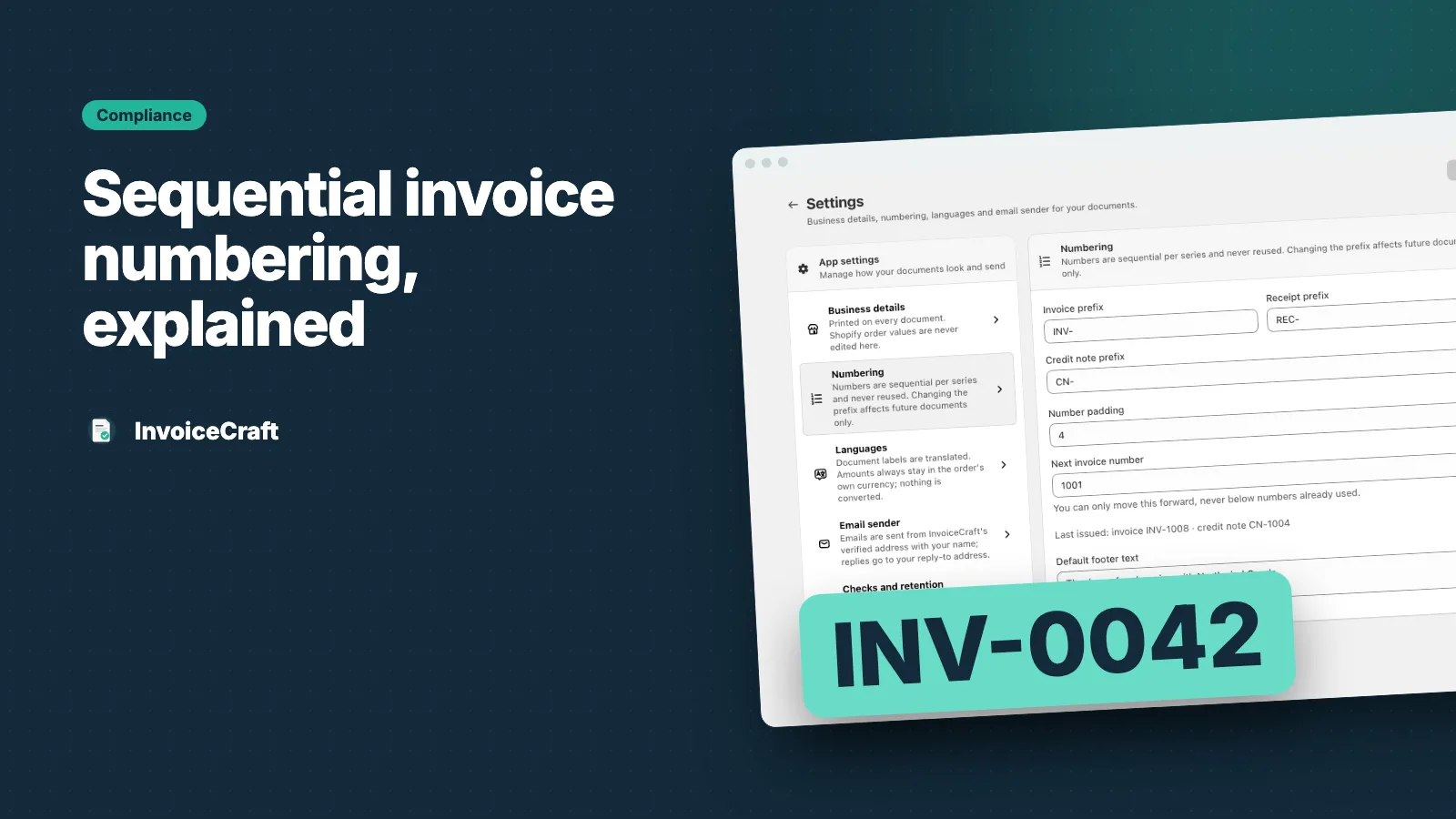
In many countries an invoice must carry a unique, sequential number. Tax authorities use the sequence to check that no invoices are missing. Gaps or duplicates can raise questions during an audit.
Why Shopify order numbers aren’t enough
Shopify order numbers (#1001, #1002 …) are assigned when an order is created — including orders that are later cancelled or never paid. That means the sequence can have gaps from an invoicing point of view. A dedicated invoice series solves this.
How InvoiceCraft numbers documents
- Separate series for invoices, receipts and credit notes, each with its own prefix such as
INV-,REC-andCN-. - Padding so numbers line up nicely:
INV-0042instead ofINV-42. - Forward only. You can raise the next number, but never set it below a number already used.
- Never reused. If an invoice is voided, its number stays taken.
What about refunds?
You shouldn’t edit an issued invoice. Instead, InvoiceCraft creates a credit note for each refund, with its own number in the credit series, referencing the original invoice.
Issued means final
Every issued document is stored as a permanent snapshot. If you download it again next year, you get exactly the same file — which is what your accountant wants.